
The Blind Spot in Women’s Health
Women’s health has always been divided into categories that women themselves do not experience separately.
Hormones. Sexual health. Pelvic health. Changes after childbirth. Menopause.
The body does not experience those changes in categories.
I’m a board-certified OB-GYN whose work focuses on hormones and intimate health across the stages of a woman’s life, with specialized expertise in menopause, sexual health, and intimate wellness.
Because painful sex, vaginal dryness, bladder leaks, changes in desire, and changes in sexual function are not inconveniences to tolerate.
They are women’s health.
If something has changed and you’re not sure where to start, start with a conversation.
Book a Free Hormone Clarity Call
Publications
The Intimacy Blind Spot: Why Menopause Care Must Evolve
Tagni C. The Journal of Sexual Medicine, Volume 23, Issue Supplement_3, March 2026, qdag063.117. Published 07 April 2026 by Oxford University Press on behalf of the International Society for Sexual Medicine.
Read the AbstractThe Interview Process
Tagni C. “The Interview Process.” In: An Obstetrician/Gynecologist’s Path: What to Expect After an Ob/Gyn Residency. Springer; 2025.
View the Chapter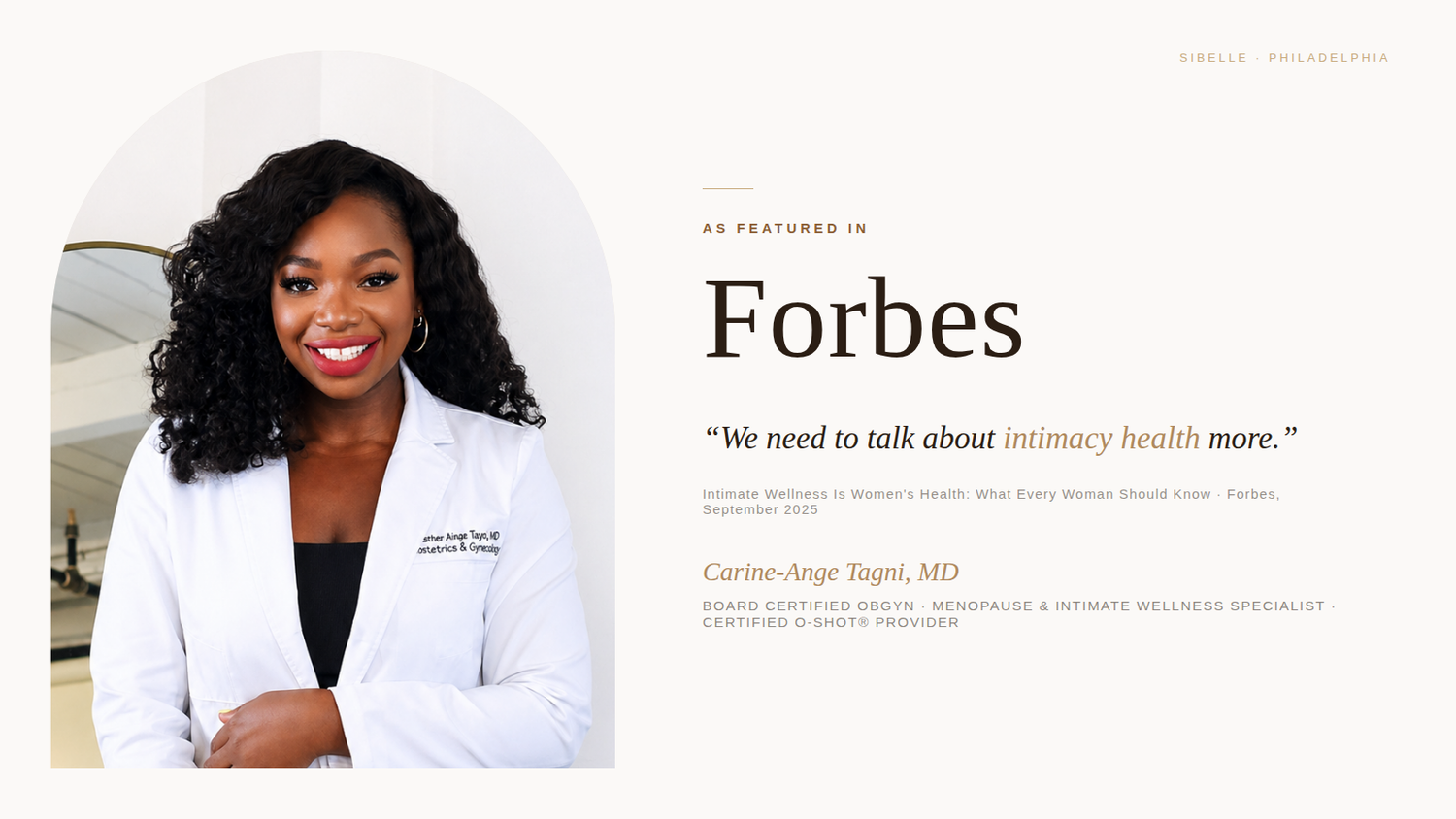

Podcast · Launching Soon
The Intimacy Blind Spot
Midlife brings questions we rarely say out loud.
We talk about hot flashes. We talk about night sweats.
But what about sex in midlife?
Why don’t I enjoy sex anymore?
Why am I always so tired?
What happened to my body?
On The Intimacy Blind Spot, those are the questions I want to talk about.
Hormones. Sex. Relationships. The body you have lived in for years suddenly behaving differently. And what the medicine actually says about it.
Twenty minutes. Sometimes just me. Sometimes with a guest worth bringing into the conversation.
- Board certified OBGYN
- Labiaplasty surgeon
- Published in The Journal of Sexual Medicine
- Founder, SiBelle Women’s Health and Aesthetics
- Forbes-featured physician
- Author
Speaking
Menopause care has expanded. Our definition of women’s health needs to expand with it.
Bone health matters. Cardiovascular risk matters. Metabolic health matters.
So does intimacy.
Sexual pain, bladder symptoms, vaginal changes, loss of desire, and changes in sexual function can alter how a woman experiences her body, her relationship, and this entire stage of her life.
Yet intimacy remains one of the persistent blind spots in menopause care.

The Intimacy Blind Spot: Why Menopause Care Must Evolve
Presented at the ISSWSH Annual Meeting and published in The Journal of Sexual Medicine.
My work examines what we miss when intimate health sits outside the standard menopause conversation, and what changes when we begin treating it as a legitimate part of women’s health.
Speaking inquiries
Clinical conferences · Grand rounds · Corporate women’s programs · Leadership summits
01
Hormones
Hormones do not affect one organ system at a time.
Sleep changes. Mood changes. Body composition changes. Sexual function changes. And often, women experience all of it before anyone names the transition they are in.
My approach to midlife hormone care begins with the whole clinical picture: symptoms, history, risk, appropriate evaluation, and treatment when indicated.
Learn More02
Intimacy
Painful sex. Vaginal dryness. Recurrent urinary symptoms. Bladder leaks. Changes in arousal, sensation, and desire.
These are not lifestyle complaints.
They sit at the intersection of gynecology, hormones, pelvic health, and sexual medicine, and they deserve the same clinical attention we give every other aspect of a woman’s health.
Learn More03
Women’s Health Across Life Stages
Pregnancy, childbirth, surgery, hormonal change, and time can change both pelvic function and anatomy.
My surgical and intimate wellness work addresses concerns ranging from labial anatomy and discomfort to bladder leakage and changes in sexual function.
The question is not whether a woman’s body looks “normal.”
The question is whether it functions and feels the way she needs it to.
Learn More